This article is general information about the nikah nama and the rights it records, not legal advice. Every marriage contract has its own facts, and outcomes in family law depend on exactly what was written, and not struck out, on your own document. Ask a family lawyer before you sign a nikah nama or rely on one in a dispute.
For case-specific guidance, speak with our court marriage lawyer in Lahore.
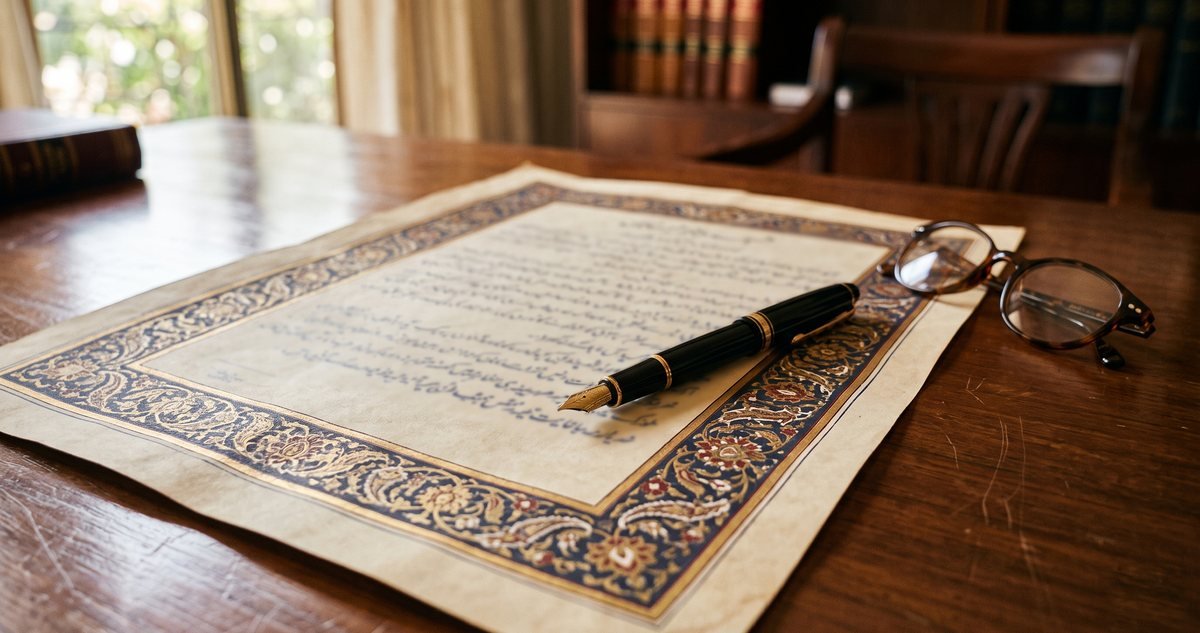
A nikah nama is the written marriage contract completed at the time of Nikah under the Muslim Family Laws Ordinance 1961 (MFLO 1961). It records who married whom, the dower agreed between the parties, and a handful of specific rights that only exist if the right column was filled in correctly and not struck out at the ceremony. Most couples treat it as paperwork to get through quickly, and the nikah registrar is often moving fast through a crowded evening of weddings. That speed is exactly where problems start. Years later, in a dower claim or a contested divorce, the columns of this one document decide who has to prove what, and to whom. This guide sets out what a nikah nama is, which columns protect the wife, how registration works, and how to get a certified copy or check one that already exists.
Key facts at a glance
| Item | Detail |
|---|---|
| Governing law | Muslim Family Laws Ordinance 1961 (MFLO 1961) |
| Who completes it | The Nikah Registrar, with the bride, groom and witnesses present |
| Where it is recorded | The Union Council in whose jurisdiction the nikah takes place |
| Rights-critical columns | 13-16 (dower), 17 (special conditions), 18 (delegated divorce), 19 (restriction on husband's divorce), 21 (existing wife and Arbitration Council permission) |
| Registration authority | Union Council, under MFLO 1961 section 5 |
| Certified copies from | The recording Union Council, or the NADRA Marriage Registration Certificate (MRC) |
What is a nikah nama?
A nikah nama is the standard form prescribed under the Muslim Family Laws Ordinance 1961 and its rules, completed by a licensed nikah registrar at the time of the nikah. The nikah itself, the marriage contract, is formed through offer and acceptance (ijab-o-qubul) between the bride and groom in front of witnesses. The nikah nama is the documentary record of that contract: it sets down the personal particulars of both parties, the witnesses, the registrar's own details, and the terms the couple agreed to, including the dower and any special conditions they wanted on record.
Both spouses, two witnesses, and the registrar sign the form. Once it is completed and stamped, the nikah nama is retained in the Union Council's register, and each party is normally given their own copy. It is this document, not a verbal account of the ceremony, that a court, a bank, NADRA, or an embassy will ask for when your marriage needs to be proven. Our guide to court marriage in Pakistan covers how consent and legal validity work at the point of marriage; this guide focuses on what happens inside the document itself.
The columns that decide your rights
A nikah nama has many boxes: personal particulars, addresses, CNIC numbers, witness details, registration information. Most of it is administrative. A small number of columns, though, decide real rights, and they are the ones a family lawyer looks at first when a marriage is in dispute.
Columns 13-16: haq mehr (dower)
Haq mehr, the dower, is a sum the husband owes the wife under the marriage contract. It is her right, not a gift he can withhold at will. Columns 13 to 16 record the amount agreed, and split it between prompt dower (payable immediately, at the nikah itself) and deferred dower (payable later, commonly on divorce or the husband's death). They should also record the mode of payment, whether cash, property, or another form of value.
Leaving these columns vague or blank is one of the most common sources of later litigation we see. If the amount was never written down clearly, or the split between prompt and deferred was never specified, the wife is left having to prove what was actually agreed from other evidence, sometimes years after the fact and after the relationship has broken down. Get the figure and the split written in plainly, not left to memory or family custom.
Column 17: special conditions
Column 17 lets the couple add conditions to the marriage contract, provided they do not contradict the essential nature of Nikah or a clear rule of Islamic law. This is the couple's one formal opportunity to put non-standard terms in writing at the time of marriage. Conditions couples commonly record here include the wife's right to continue working or studying after marriage, or a restriction on the husband contracting a further marriage without her consent. A condition agreed verbally and never written into column 17 is far harder to enforce later.
Column 18: the delegated right of divorce (talaq-e-tafweez)
Column 18 records talaq-e-tafweez, the husband's delegation of his own right of divorce to the wife. Where this column is filled in and not struck out, the wife can exercise divorce directly, without her husband's cooperation and without filing a khula petition in Family Court and proving one of the statutory grounds. It is, in practical terms, the single most consequential column in the entire form for a wife who may one day want to leave the marriage.
In our experience, this is also the column most often lost without the bride realising it. Registrars routinely strike it out as a matter of habit, or leave it unaddressed in the rush of a wedding evening, and nobody explains to the bride what she is giving up. If column 18 is crossed out, her route to end the marriage without her husband's agreement is a khula petition: a court process that requires her to prove grounds and can take considerably longer. Our guide to the khula procedure in Pakistan sets out that route in full, including how the two compare in practice.
Column 19: restrictions on the husband's right of divorce
Column 19 is where the couple can record agreed restrictions on how or when the husband exercises his own right of divorce, for example requiring written notice to the wife or a waiting period before it takes effect. It is separate from column 18: column 18 gives the wife a delegated right to divorce, while column 19 restricts the husband's existing right. In practice, couples focus entirely on column 18 and skip past column 19 without a second look, even though it can matter just as much once a marriage breaks down.
Column 21: existing wife and Arbitration Council permission
Column 21 records whether the groom already has a wife at the time of this nikah, and if so, whether permission from the Arbitration Council was obtained beforehand, as the law requires before a further marriage. A missing or false entry here is not a paperwork slip. It can mean the existing wife was never informed or asked to consent, or that permission was never actually sought from the Arbitration Council, and both create real legal exposure for the husband later. Our guide on second marriage law in Pakistan covers the permission process and what happens when it was skipped.
Common mistakes at signing time
Most nikah nama problems trace back to the few minutes around signing, not to anything that happens afterward. The mistakes we see most often:
- Signing without reading every column, especially by the bride, who is often pressured not to hold up a crowded ceremony.
- A crossed-out column 18 that nobody explained, so the bride believes she has a delegated right of divorce she does not actually have.
- Blank or vague haq mehr columns, with the amount left to be sorted out "later" or by family understanding.
- Witnesses who sign after the event, or who were never actually present at the nikah.
- Names, CNIC numbers, or addresses recorded incorrectly, which causes friction later when NADRA or a passport office tries to match the record.
- Assuming a religious nikah performed by a maulvi is enough on its own, without registration at the Union Council.
- Leaving the ceremony without a copy of the signed nikah nama in hand.
Before you sign, read every column, including the ones that are blank or crossed out, and ask the registrar to explain them. Confirm the dower figure and the fate of column 18 out loud, in front of witnesses, and take your own copy away with you on the day.
Registration: what makes it official
The nikah itself is a religious and contractual act. Registration is what makes it provable to the state, and it is a legal requirement, not an optional extra. Under MFLO 1961 section 5, every nikah has to be reported to and registered by the Union Council in whose jurisdiction it takes place. The nikah registrar is the officer licensed to complete the nikah nama and is under a duty to report and register the marriage with that Union Council.
The law treats non-registration as an offence, with a penalty attached, even though the underlying marriage may still be religiously valid. In practice, most nikahs performed by a licensed registrar are registered as a matter of course. In our casework, the gaps we see most often involve marriages performed abroad, or by a celebrant who was not a licensed registrar. Where a nikah was never registered, a late registration route exists: the couple can apply to the relevant Union Council, generally supported by an affidavit setting out the facts and the reason for the delay, though the exact requirements can vary between Union Councils. Our guide to court marriage in Pakistan goes into the Union Council registration process in more depth.
How to get a certified copy or check a nikah nama
The Union Council that recorded your nikah holds the original register, and that is where a certified copy comes from. If you know which Union Council performed your nikah, that is your starting point; if you have lost track of it, your original nikah nama (or a relative's copy of it) usually names the office. You generally request a certified copy in person, with your CNIC and the marriage details to hand.
Separate from the Union Council record is the NADRA Marriage Registration Certificate (MRC), the computerised, national-level record of the marriage. Because it sits in a searchable national database rather than a single local register, the NADRA MRC is what most embassies, visa offices, and passport authorities ask for, and it is worth obtaining even where you already hold a Union Council copy. Our dedicated guide to the NADRA marriage certificate in Pakistan walks through how to apply for one and how it differs from the nikah nama itself.
Checking or verifying an existing document, for example when a marriage is disputed or its authenticity is in question, means cross-checking it against the Union Council's register or the NADRA database rather than relying on the paper copy alone. A lawyer can do this on your behalf where the marriage is contested, or where you suspect a nikah nama has been altered or falsified.
Can a nikah nama be changed after marriage?
Clerical errors, a misspelled name or a wrong date, can normally be corrected at the Union Council with supporting documents. Substantive changes are a different matter. Adding a condition that was never in the original document, or altering the dower arrangement after the fact, generally cannot be done by simply editing the original form. It needs a fresh, separately drafted and witnessed agreement between the spouses.
Both spouses can, by mutual consent, give effect to a post-marriage supplementary agreement and have it recorded with the Union Council in the prescribed manner. Have it drafted by a lawyer rather than agreed informally between the families, because an informal side agreement is exactly the kind of document that gets disputed later, when neither party can prove what was actually agreed.
Nikah nama problems a family lawyer handles
The disputes that reach a family lawyer's desk almost always trace back to one of these columns. Dower enforcement suits are the most common: a claim to recover haq mehr that was agreed in columns 13-16 but never paid, whether that is prompt dower withheld at the time or deferred dower still unpaid on divorce. Column 18 disputes come up almost as often, usually a disagreement over whether a wife can exercise talaq-e-tafweez directly, or whether the column was struck out so she must petition for khula instead, and this is sometimes discovered only once she tries to act on a right she believed she had. Forged or disputed signatures turn up too: one party denying they signed, or claiming a signature was obtained under pressure or without their knowledge. Registration gaps cause their own problems, where a marriage was never registered, or was registered with errors, and that later complicates custody, inheritance, or an immigration application. And column 21 disputes arise when a second marriage was contracted without Arbitration Council permission, or without the existing wife's knowledge, usually raised by the existing wife or her family.
Most of these are avoidable with a careful reading of the document at the time it is signed. Once a dispute has already started, the same columns become the evidence a family court relies on.
Frequently asked questions
What is a nikah nama?
A nikah nama is the written marriage contract completed under the Muslim Family Laws Ordinance 1961 at the time of Nikah. It records the personal details of the bride and groom, the witnesses, the dower agreed, and any special conditions, and it is signed by both spouses, two witnesses, and the nikah registrar before being lodged with the Union Council.
What is column 18 of the nikah nama?
Column 18 records talaq-e-tafweez, the husband's delegation of his own right of divorce to the wife. If it is filled in and not struck out, the wife can pronounce divorce herself, without needing her husband's agreement or a khula petition in Family Court. It is often crossed out at the ceremony without the bride being told what she is losing.
What should be written in the haq mehr columns?
Columns 13 to 16 should state the dower amount clearly, split between prompt dower (paid at the nikah) and deferred dower (paid later, typically on divorce or death), along with the mode of payment. Leaving these vague or blank is a leading cause of dower disputes years after the marriage.
How do I check or verify a nikah nama?
Cross-check it against the Union Council register that recorded the marriage, or against the NADRA Marriage Registration Certificate. This matters where a marriage is disputed, or where you have reason to think a nikah nama may have been altered. A lawyer can carry out this check on your behalf.
How do I get a certified copy of my nikah nama?
Request it from the Union Council that originally recorded your nikah, with your CNIC and marriage details. If you need a copy accepted internationally, for example for a visa, apply separately for a NADRA Marriage Registration Certificate, which is the computerised national record.
What happens if a nikah is not registered?
An unregistered nikah may still be religiously valid, but non-registration is an offence under the law and leaves you without the documentary proof a court, bank, or visa office will ask for. A late registration route exists through the relevant Union Council, generally supported by an affidavit explaining the delay.
Can the nikah nama be changed after marriage?
Clerical errors can usually be corrected at the Union Council. Substantive changes, such as a new condition or an altered dower arrangement, need a fresh, properly drafted and witnessed agreement between the spouses rather than an edit to the original form, and are best handled with a lawyer rather than informally.
Speak to a family lawyer in Lahore
If you are about to sign a nikah nama, or you already have one and need to know what it means for a dower claim, a divorce, or a second marriage, do not act on assumptions about what the columns say. Saeed Law Firm has practised family law in Lahore since 1975 and offers a free initial consultation. We review the columns before you sign, advise on dower and talaq-e-tafweez rights, and represent clients in Family Court on nikah nama disputes. Contact us or call +92-319-4959420.
For help with this issue, our court marriage lawyer in Lahore can review your documents and next step.
Saeed Law Firm, Y Block Main Market, Sector Y, DHA Phase 3, Lahore 54793. Phone: +92-319-4959420.