Key facts at a glance
- Khula is a Family Court decree under section 10(4) of the West Pakistan Family Courts Act 1964. The wife can seek it without her husband’s consent or proving a fault ground.
- A lawyer can file the suit under a special power of attorney. The court may still ask the wife to give evidence herself.
- You can request video participation in advance, but the court must approve it. The request does not give you a right to complete the case remotely.
- The court decree goes to the Union Council for recording and certification. That step is separate from a husband’s talaq notice.
| Route | Decision-maker | What happens next |
|---|---|---|
| Khula | Family Court | The decree is sent to the Union Council for recording and its certificate. |
| Talaq under section 7 | Union Council Chairman and Arbitration Council | Notice and reconciliation procedure apply before the talaq becomes effective. |
Can you get khula without coming to Pakistan?
Often, a lawyer can manage much of a khula from abroad, but the court may still ask you to attend. Khula is decided by a Family Court. Counsel can file the suit under a special power of attorney, while the judge decides what evidence and attendance your case requires.
Ask counsel to confirm which Family Court is the proper one for your circumstances before the suit is prepared.
If a Lahore Family Court has jurisdiction, hearings take place at the Family Courts at Aiwan-e-Adl, Lahore. The judge may want to hear from you directly about your decision to seek dissolution and whether reconciliation is possible. If you are pursuing khula from UK or other overseas addresses (the Gulf, Canada, the US), discuss the likely evidence and attendance arrangements with counsel before signing documents.
Counsel can file the suit under a special power of attorney drafted narrowly for this case. The court may still require your own evidence. You can request a video link if travel is difficult, but the court decides whether to approve it.
Khula and talaq follow different routes. A husband gives talaq notice to the Union Council under the Muslim Family Laws Ordinance 1961. Khula is a suit in the Family Court under section 10(4) of the West Pakistan Family Courts Act 1964. For the separate talaq route, see divorce procedure for overseas Pakistanis.
The special power of attorney for a khula case
Counsel can file a khula suit under a special power of attorney (POA). Keep its scope narrow and specific to this case. The court may still require your own evidence.
Go through the draft with your lawyer before signing it. The attorney’s name and identity details should match their identification documents, and the POA should say which proceedings it covers. Keep a signed copy and the supporting identity records with your case papers. If the court requires you to give evidence, your attorney cannot do that for you.
Both the digital POA route and manual attestation at a Pakistani mission are in use. The digital process asks for identity details for the applicant, attorney and witnesses, biometrics, a scanned draft and a video interview with the mission. Requirements vary by mission, so check its current instructions before preparing the document. In Pakistan, the attorney attends with original CNIC for MOFA verification under the central SOP. Read the power of attorney in Pakistan guide before starting.
The khula case step by step when you are abroad
The steps below describe the general route. The judge may ask for more information or require you to take part yourself.
- Prepare the case papers. Send your nikah nama, identity documents, contact details, your husband’s last known address and a clear account of your decision to seek dissolution. Your lawyer checks the papers and prepares the suit.
- Execute the special POA. Choose the person who will act for you in Pakistan and complete attestation through the route your mission accepts. Give your lawyer the signed document and any verification records.
- File in the Family Court. Counsel files the suit and follows the court’s directions. The process includes notice to your husband. If he also lives abroad, accurate last-known contact and address details help counsel explain the service position. The method of serving a husband overseas is for the court to direct.
- Attend the pre-trial reconciliation stage. The Family Court considers whether reconciliation is possible. Stay available to answer your lawyer’s questions and send further documents. If the judge wants your evidence, counsel can request a video link in advance, subject to approval.
- Obtain the court’s decision. If reconciliation fails, section 10(4) provides for a decree of dissolution. The court may also address restoration of dower or benefits received from your husband, as explained below.
- Complete the Union Council record. The decree goes to the Union Council, which records the outcome and issues its certificate. This comes after the court decree. The husband’s section 7 talaq notice and Arbitration Council procedure do not apply to khula.
Delays can arise if your husband’s address is incomplete, service is disputed, documents do not match, or he contests the case. Timing depends on service, whether he contests, and the court’s list.
Appearing by video link
For khula from abroad, the Lahore High Court video-link facility reported by APP was introduced for district courts across Punjab in November 2025. An overseas litigant may ask to participate through a Pakistan mission or an authorised notary. The request must be made in advance and approved by the court. A video link is not automatically available, and it does not create a right to complete the khula case entirely online.
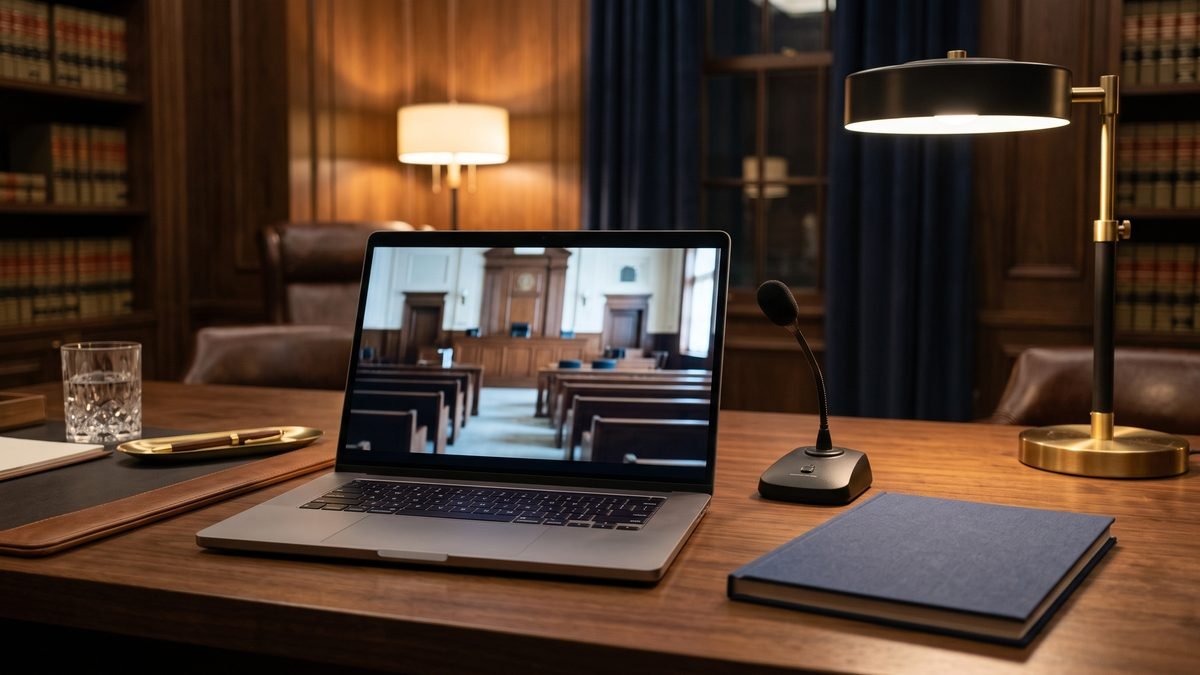
Ask your lawyer to make the request early, explain why you want to take part remotely, and name the proposed location for the link. The court decides whether that arrangement suits the hearing and evidence. Leave time for the judge to require another form of participation or further documents.
In Salman Ahmad Khan v Judge Family Court, Multan (2017 PLD Lahore 698), the Lahore High Court recorded a plaintiff’s evidence by video link. The case shows that the court has considered remote evidence. It does not mean every later request will be allowed.
Khula video link: what to ask your lawyer
Ask counsel whether the request has been put before the judge, what identification or verification the court wants, and whether the proposed mission or authorised notary can support the arrangement. The court makes the decision. Keep your passport and case references available. Do not book travel or assume a hearing will be remote until the court approves the request.
Dower and gifts in a khula decree
When granting khula, a Family Court may direct the wife to restore dower or benefits received from her husband. Under section 10(4), as amended in Punjab, the court decides what, if anything, must be restored. No fixed deduction applies automatically to every khula decree.
Under the Punjab 2015 amendment, the Family Court may direct the wife to surrender up to 50% of deferred dower or 25% of admitted prompt dower in a khula decree. These are powers the court may use, not automatic deductions. Share the nikah nama and any evidence of dower paid, deferred or disputed with your lawyer. For the document’s terms, see the nikah nama guide.
After the decree: certificate and recognition abroad
After the court issues a khula decree, the Union Council records the outcome and issues its certificate. The certificate records the court result; it does not replace the Family Court decree. Once the dissolution is recorded, the marital-status record can be updated with NADRA.
NADRA’s PakID divorce-certificate application is available in all Punjab districts, as confirmed on 20 January 2026. It records the Union Council or court outcome and does not replace it. Keep copies of the decree, the Union Council certificate and the identity details used in the case. For the NADRA stage, see the NADRA divorce certificate guide.
Before sending originals abroad, check the receiving authority’s current document and authentication requirements. The MOFA attestation guide explains the Pakistan document process. For recognition of a Pakistani khula in the UK, get legal advice about your circumstances. A lawyer in the UK or Canada can advise whether a court khula will be recognised there.
Documents to send from abroad
To prepare for khula from abroad, send clear scans first. Then ask counsel which originals or certified copies the court or Union Council will need. Check with your lawyer before posting original identity documents. A missing page, inconsistent spelling or old address can mean a filing or service step needs correction.
- Nikah nama, including all pages and any attached schedules.
- Your CNIC or NICOP and passport identity page.
- Reliable contact details.
- Signed special power of attorney and any mission or MOFA verification record.
- Your husband’s CNIC details, last known address and available contact information.
- Any earlier court papers, notices or correspondence about the marriage or separation.
- Details of dower paid or deferred, and documents relevant to any dispute about it.
Before drafting, the lawyer compares names and dates in the nikah nama and identity documents. If any document is not in English or Urdu, ask counsel whether a translation or certified version is needed. The papers required can depend on the case and court directions. Use this list to prepare, rather than as an official filing checklist.
Frequently asked questions
Can I file for khula online?
You can instruct a lawyer from abroad, and a special POA can authorise counsel to file in the Family Court. The case itself does not take place wholly online. The court controls filings, service, hearings and evidence, and may ask you to participate. A video-link request needs advance notice and the court’s approval.
Do I need my husband’s permission for khula?
No. A wife can seek dissolution through the Family Court without her husband’s consent. The court considers the suit and attempts reconciliation at the pre-trial stage. If reconciliation fails, section 10(4) of the West Pakistan Family Courts Act 1964 provides for a decree. The court may also address restoration of dower or benefits.
My husband lives abroad too: where do I file?
Ask counsel which Family Court is the proper one if you both live abroad. A Lahore court may be appropriate only if the case has the necessary connection accepted by the court. Give a lawyer the marriage details, any prior residence information and your husband’s address so they can assess the proper filing forum before preparing the suit.
Can my father file khula for me?
You may appoint your father as attorney to take the steps authorised by a special POA, and a lawyer can file the suit on your instructions. The decision to seek khula is yours. Your father cannot give evidence in your place if the judge requires it. The court may consider a video-link request made in advance, but decides whether to approve it.
Will my khula be valid in the UK or Canada?
Ask a lawyer in the UK or Canada whether a Pakistani court khula will be recognised there. Check that authority’s document requirements.
How long does khula from abroad take?
There is no promised duration for khula from abroad. Timing depends on service on your husband, whether he contests the case and the court’s list. An incomplete address or a dispute about service can also cause delays. Your lawyer can update you as the court gives directions.
Speak to a khula lawyer in Lahore
Saeed Law Firm handles family-law matters in Lahore. Bilal Saeed is an Advocate of the Punjab Bar Council, admitted to the Lahore High Court, District Courts Lahore and Family Courts Lahore. The office is at Y Block Main Market, Sector Y, DHA Phase 3, Lahore 54793, Pakistan. Call or message on WhatsApp at +92 319 4959420. Overseas clients can arrange a free initial consultation remotely by phone, WhatsApp or video.
For representation in Lahore, contact a khula lawyer in Lahore or see the family court lawyer in Lahore. The overseas Pakistani lawyer service covers instructions from abroad. For the domestic process, read the khula procedure in Pakistan guide. If you need safety planning or support, see the guide to domestic violence laws in Pakistan.